Zellige guide: formats and laying patterns
Tomettes, bejmat, mosaic, traditional and contemporary formats. Chevron, herringbone, tight joints or not. An overview.
Published on by the Amarchy team
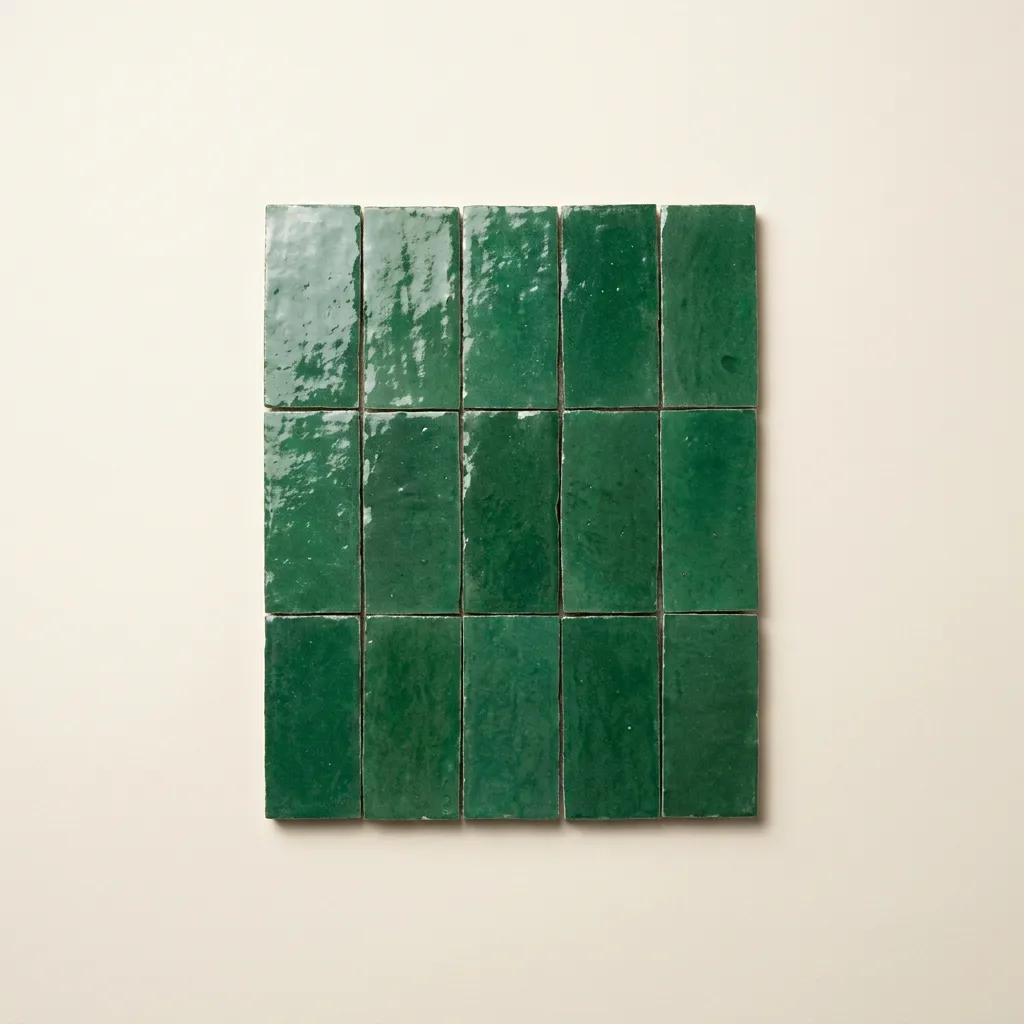
What is zellige?
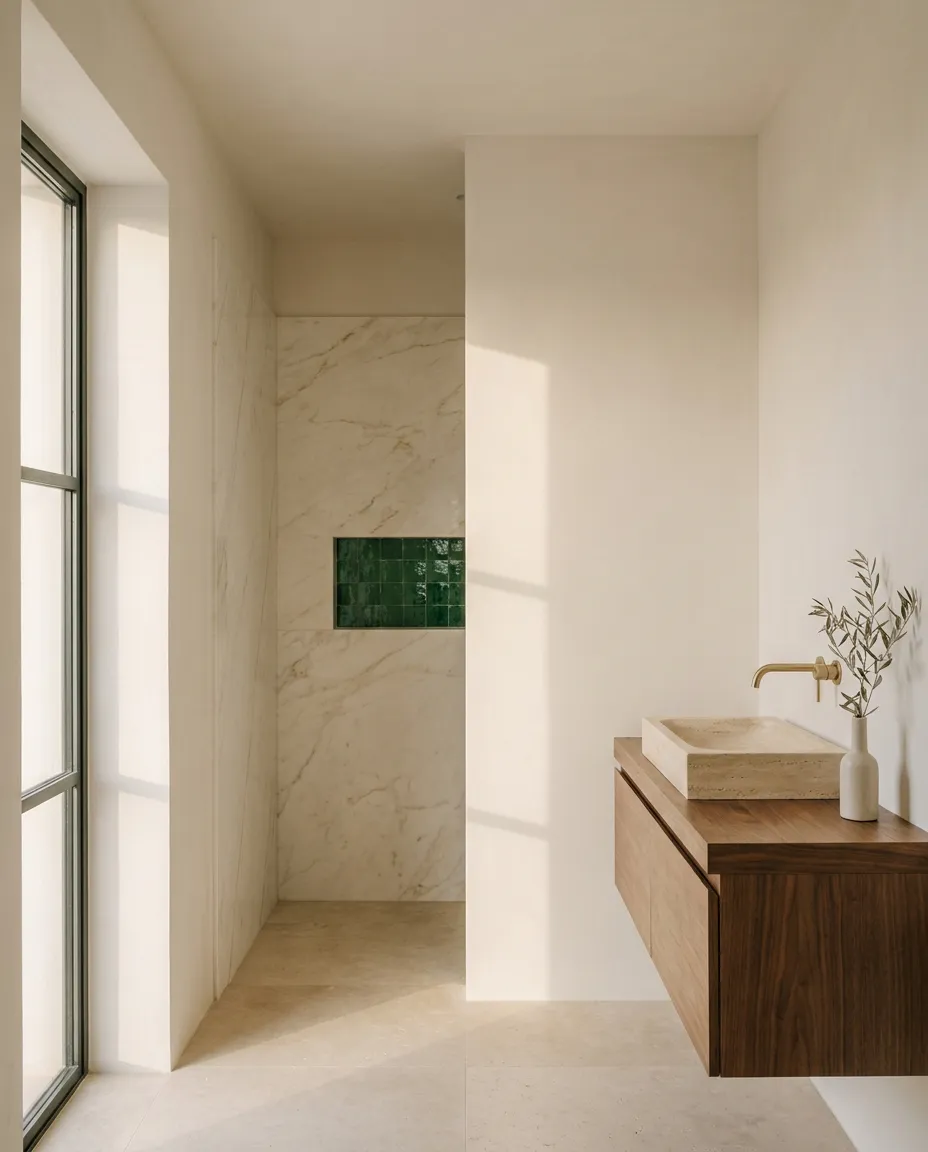
Zellige is a glazed terracotta tile that has been shaped and cut by hand in Fez for centuries. Every piece is unique: its slightly uneven surface catches the light.
The traditional formats
Three formats to know before you choose.
10×10 cm
The standard. Ideal as wall cladding, tightly laid, for a ‘wall of water’ effect.
Bejmat 5×15
An elongated format, perfect in a chevron or herringbone pattern. Widely used in contemporary kitchens and bathrooms.
20 cm hexagonal tomettes
Rarer, they are the mark of a handcrafted floor. Red clay, wood-fired.
The laying patterns
The same tile changes character with the way it is laid.
- Tight laying (1 mm joint): a continuous look, recommended for hammams and wet areas
- Visible joint (3 to 5 mm): a more pronounced Mediterranean style
- Chevron: a V-shaped pattern, dynamic and geometric
- Herringbone (broken line): a variation on the chevron, more traditional
- Chequerboard: two alternating colours
Technical advice
Four points to check before ordering and laying.
- On floors, choose a format larger than 10×10 cm and a perfectly level substrate
- In wet areas, epoxy grout is essential
- The uneven look is a characteristic, not a defect
- Allow 15% for offcuts, compared with 10% for standard tiles
Lead times
Standard zellige: 1 to 2 weeks after ordering. Special colours and bespoke patterns: 6 to 8 weeks, from Fez.